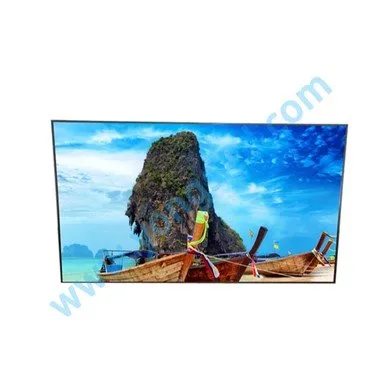
Digital Signage is a brand new media concept. It refers to the public places where large shopping malls, supermarkets, hotel lobbies, restaurants, cinemas and others converge, through large-screen terminal display equipment, to publish business, finance and entertainment Information multimedia professional audio-visual system. Its purpose is to broadcast advertising information to a specific group of people in a specific physical place and a specific time period, so that it has the effect of advertising. In foreign countries, some people put it alongside paper media, radio, television, and the Internet, calling it the "fifth media."
Digital signage has the following characteristics:
1) Foolish program editing interface. Operators can use editing and publishing software to publish various text, icons, animations, videos, audio information and other digital information anytime, anywhere without special training, and integrate them into a "digital sign" for advertising The form is released.
2) Convenient maintenance. The system automatically plays, no special management operation is required. Even if the terminal player is accidentally powered off, the system will automatically replay when the power is turned on again, without human operation.
3) Powerful multi-layer mixing function, supporting mainstream formats such as composite video, component video, HDTV high-definition video, and realizing mixed display in multiple ways such as arbitrary window opening, transparent overlay, special effect flip, and scrolling text.
4) Use a variety of media expression methods (video, audio, pictures, animation), called narrowcast system.
5) A dynamic advertisement that allows the content to change constantly with each passing day.
6) Similar to TV advertisements and advertisements on webpages, but it is highly targeted, flexible and changeable in form and content on demand. Therefore, it can borrow existing various production tools (such as: web page production, VCD production, FLASH production, etc.) mixed use.
7) It is a new technology produced by the integration of network technology, multimedia broadcasting technology, software component development and integration technology. It is a user-oriented production technology, that is, users can easily learn to make various signs by themselves.
8) This is a rapidly developing technology, and it is becoming mature, including technology, the market and the structure of the industry will soon become mature.
Functional application analysis
Digital signage has changed the traditional mode of information dissemination, and the wonderful screen display brings visual enjoyment to a broad audience. Digital signage attracts customers because it conveys the message in a familiar, high-quality form and is equipped with entertainment equipment. In order to obtain long-term advertising sales revenue, digital signage also attracts companies because it can provide instant updates, targeted visual communications, and the content is rich and attractive. In general, the applications of digital signage in various industries can be divided into queuing applications, query applications, exhibition applications and promotion applications.
Digital signage application analysis
Source: Statistics compiled by Xinsijie Industry Research Center
Nowadays, digital signage has become an important information dissemination tool in many places such as large shopping malls, hotel lobbies, supermarkets, cinemas, and office buildings.
Industry chain analysis
1) Upstream manufacturers
Digital signage, like computer products, consists of two parts: hardware and software, and the corresponding upstream companies are hardware suppliers and software suppliers.
Hardware suppliers mainly include screen manufacturers, processor suppliers, player manufacturers, switches and wiring and other component manufacturers. The software part of the digital signage includes system software, playback software, terminal control software and implantable functional software.
Digital signage has its own operating system and needs to install special playback software to realize multimedia playback functions. To realize intelligent remote terminal control, it is necessary to install supporting terminal control software.
Many businesses use digital signage to publish service information and online entertainment information in a timely manner. At the same time, they want to achieve the effect of interactive communication with consumers and realize special functions, such as independent information query, independent ordering, and queuing. This requires the development of functional software Cooperate with suppliers to install specialized functional service software on the digital signage system.
2) Digital signage manufacturer
Manufacturers that produce digital signage are generally solution integrators, providing different assembly and operation solutions for different industries, integrating rich software, hardware, and the most extensive resources.
If the digital signage is only used to broadcast the internal information of the enterprise or organization, and there is no need to update the data and broadcast content in time, the stand-alone digital signage can meet the needs of customers, and the stand-alone digital signage needs to manually replace the broadcast content.
The online version of digital signage can be directly connected to the Internet. By selecting the content and sections that need to be played, the digital signage will automatically update the rich resources on the Internet. The online version of the digital signage can also be connected to a PC. The user can realize the digital signage through the PC. Control, such as setting the playing time, playing times, and seamless screen splitting.
When the number of digital signage display terminals is relatively large, in order to realize intelligent management and set different operation permissions for different members, it is necessary to install special control software and be equipped with a special server to realize the 24-hour uninterrupted operation of digital signage. When the number is not large (about 10 units), you can also directly use the PC as its server.
3) Downstream users of digital signage
Digital signage has a wide range of applications. All merchants who use digital signage as a terminal to deliver service information or promote products are downstream users of digital signage, such as banks, securities companies, hospitals, hotels, schools and other institutions. If the advertising business wants to place the advertisement, the design and production of the advertisement need to be entrusted to the advertising production company; specialized media companies, network operators and other advertising providers are responsible for the advertising; in addition, the advertising business needs to evaluate the effect of digital signage. , You need to cooperate with a special evaluation agency.
Digital signage industry chain model
Source: Statistics compiled by Xinsijie Industry Research Center
New technology and new trend
Digital signage plays an increasingly important role in the process of social informatization. The technological level of an enterprise is the key to determining the quality of digital signage products. my country's digital signage has a large gap with foreign well-known manufacturers in terms of technology, especially in the high-end market. However, as one of the world's largest markets, the demand for digital signage in social life and commercial applications such as public facilities and commercial advertising is also great. In the growth, many international brands and local brands have entered to seize the opportunity.
With the development of China's informatization and digitalization, technology is driving tremendous changes in all aspects of our society, including digital signage. Nowadays, technology has given more power to the development of digital standards. According to the industry analysis of New Thinking, the current digital signage industry mainly embraces new technologies including:
System-on-chip (SoC) technology has developed rapidly in recent years and has almost replaced the need for external media players. This technological trend change means that digital signage only needs to run software through the screen, thereby providing a more streamlined solution.
Commercial-grade screens, such as OLED screens, can provide users with more advanced functions and achieve higher contrast. The current innovative screens also provide ultra-thin and curved technology, these options are particularly effective when creating a flowing wave-like large-screen display wall.
LED display technology, although this technology is relatively expensive, but the usage has been increasing. Especially for large-format display projects to improve cost-effectiveness, it is an ideal choice for large-scale installation projects.
High-definition projection. By combining high-resolution (HD) projectors with professional transparencies, retailers can convert their standard see-through window displays into large-format digital screens that can display dynamic video or static visual images.
In-store music and in-store background music are now or have become a trend. The retail industry and fast food chains have begun to realize and pay attention to this technology.
In all vertical industries such as transportation, property, retail, venues, etc., industry players are beginning to realize that it is vital to make full use of an effective digital signage system solution and adopt novel ways to capture the attention of customers. Compared with the past, owners and users only pay attention to the content on the screen and the final performance results. Now people are more aware that regardless of the placement of the screen and the creation of dynamic content, they all determine the effectiveness of digital signage in the store. The technology is still digital. The main driving force of the sign industry.